

We share expert insights, strategies and other content to help you navigate shifts in technology, managing change and improving processes to stay competitive in a dynamic global business market.
Latest Articles
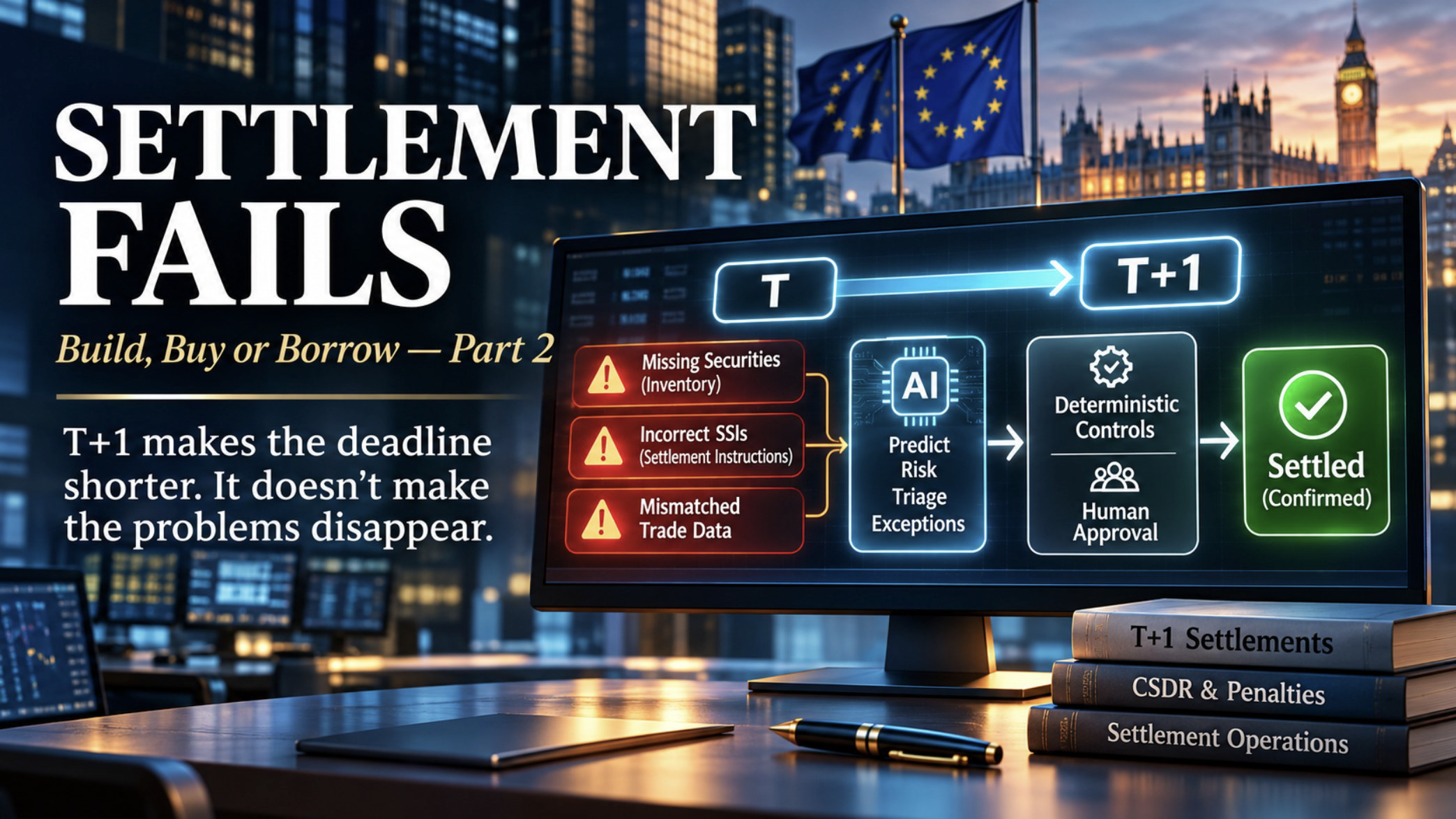
Settlement Fails
Build By or Borrow — Part 2
North America moved to T+1 in May 2024. Affirmation jumped. Fail rates barely moved.
Compressing the cycle pushed the work earlier into trade date but left the causes in place, and those causes are mostly inventory and data. On 11 October 2027 the EU, the UK and Switzerland make the same move, with more CSDs, more currencies, tighter windows across time zones and a cash penalty regime that is already running.
Part 2 of the series looks at what a fail really costs, why most of them trace back to data, and why Europe is harder than North America was. For North American firms with European exposure, FX funding shifts onto trade date and custodians will pass penalties down the chain.
Then the practical question. AI can score every trade for fail risk on trade date, check SSIs before they drift, and rank the exception queue by cost. Instructions, recalls, buy-ins and client communications stay with deterministic controls and a human who signs off. Build, buy or borrow? With a date that won't move, the answer depends on your fail rate by root cause.
The model proposes, and the controls dispose.